When does a residential project become difficult to manage?
Complexity is not determined by floor area alone. A substantial extension can be more demanding than a larger new build if it involves structural alterations, temporary support and careful connections to an occupied house. Steelwork, restricted access, specialist contractors and long-lead materials can each affect how the work is planned.
Some decisions also reach much further than they first appear. A change to an opening may affect the structure, windows, services and internal finishes. Building while part of a property remains occupied adds another layer of access, safety and sequencing. Cornish sites can bring steep ground, narrow lanes or coastal exposure, all of which need practical consideration.
None of this means that every substantial project requires a separate project manager. It does mean that someone needs to understand the overall sequence, recognise the connections and make sure important information does not sit unanswered while work waits on site.
Good individual trades still need a clear sequence
Capable trades can only work efficiently when the preceding work is ready and the information they need is available. A steel beam cannot be considered in isolation: its dimensions may determine wall positions, window openings, ceiling levels and the way finished surfaces meet. If those details are unresolved, several trades can be delayed by one missing decision.
Scaffolding can affect deliveries, glazing, roofing and external finishes. First-fix plumbing and electrical work need client decisions before walls are closed and plastered. Windows and weatherproofing influence when internal work can safely progress. Kitchen layouts, sanitaryware and floor finishes can all have knock-on effects on services and finished levels.
A clear sequence gives each trade a reliable starting point. It also makes it easier for the client to understand which decisions are needed next, rather than being asked to make several urgent choices after the work has already reached them.
Decisions made on paper have to work on site
Drawings, schedules and calculations establish what is intended, but the physical work still has to come together on a real site. Existing buildings may differ from assumptions made before areas were opened up. Access may influence the size and order of deliveries. Temporary works or weather protection may be needed before the permanent detail can be completed.
Architects, structural engineers, quantity surveyors and Building Control retain their own professional responsibilities. Experienced construction oversight helps connect their information with the people carrying out the work, raises practical questions at the right time and keeps everyone working from the latest agreed details.
What experienced oversight can provide
For the client, one informed point of contact can make a complicated project easier to follow. Regular progress review helps establish what has been completed, what should happen next and which decisions or information are still needed. Missing details can be identified before the affected trade arrives rather than after work has stopped.
Practical oversight also supports communication between the client, designers and trades. Lead times can be considered alongside the programme, and site issues can be discussed with the right people while the relevant work is still accessible. This does not remove every uncertainty or guarantee a particular date or cost, but it can provide a clearer and better-controlled route through the build.
GMS Building provides experienced construction project management in Cornwall for selected substantial residential projects.
Experience from a complex residential project in Feock
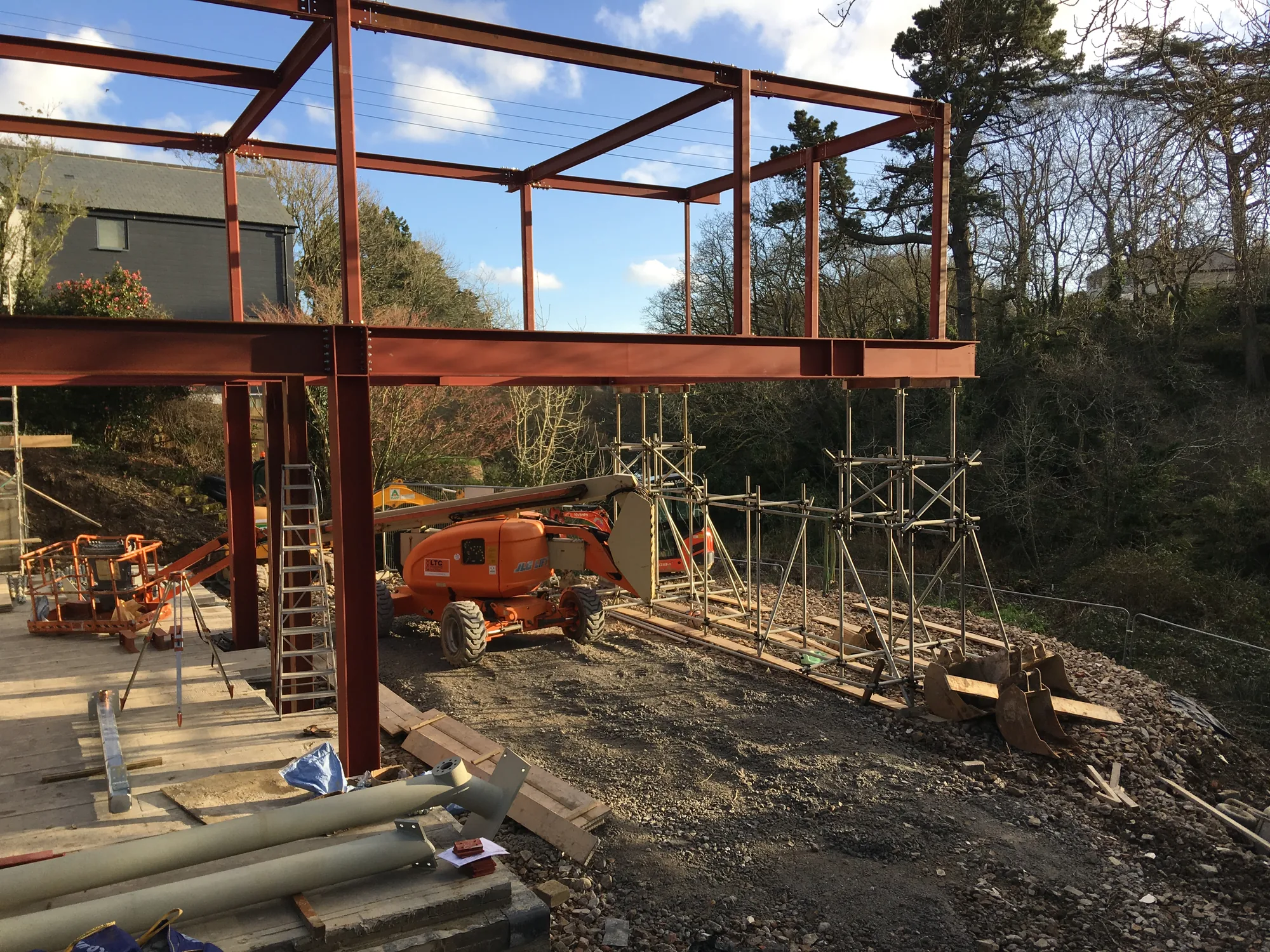
The photographs on GMS Building’s Project Management page show the construction of Sylvania, a distinctive residential project in Feock. Graham Slyfield managed the project on site during his time with Davey Construction Ltd.
The completed home was later featured in Grand Designs Magazine, which described Graham as the site manager responsible for ‘supervising day-to-day business and keeping the neighbours on board.’
Grand Designs Magazine, September 2019
This experience involved the everyday realities of a technically demanding build: keeping information moving, coordinating construction activity and dealing with the practical issues that emerge as a complex design takes shape on site. Sylvania was not a GMS Building project; it forms part of Graham’s previous professional experience.
Is project management right for every build?
Project management is more likely to be useful where the work is substantial, several trades or contractors are involved, or the design has demanding structural and technical details. It may also help when an owner cannot monitor progress closely, when access and sequencing are difficult, or when there is a clear need for one experienced construction contact.
Smaller, straightforward projects may not need a separate project-management role. A capable main contractor may already provide the level of day-to-day control required. The important point is to understand who is responsible for connecting the design information, client decisions and work on site before construction begins.
If the proposed work is primarily an addition to an existing home, the GMS Building house extensions service explains how extension and renovation work is approached across Cornwall.
Discussing the right level of involvement
A useful first conversation considers what is being built, the current design stage, who is already involved and what information is available. It also helps to understand how the construction is expected to be organised, the likely programme and where practical oversight would add most value.
Graham can then discuss whether the project is a suitable fit and what level of involvement would be useful. The aim is not to add unnecessary management, but to provide clear, experienced oversight where the scale or complexity of the work genuinely benefits from it.
You can learn more about GMS Building or tell Graham about your proposed project.